Call Tracking for E-Commerce: Connecting Online Ads to Offline Phone Sales
- calltrack.ai
- No Comments
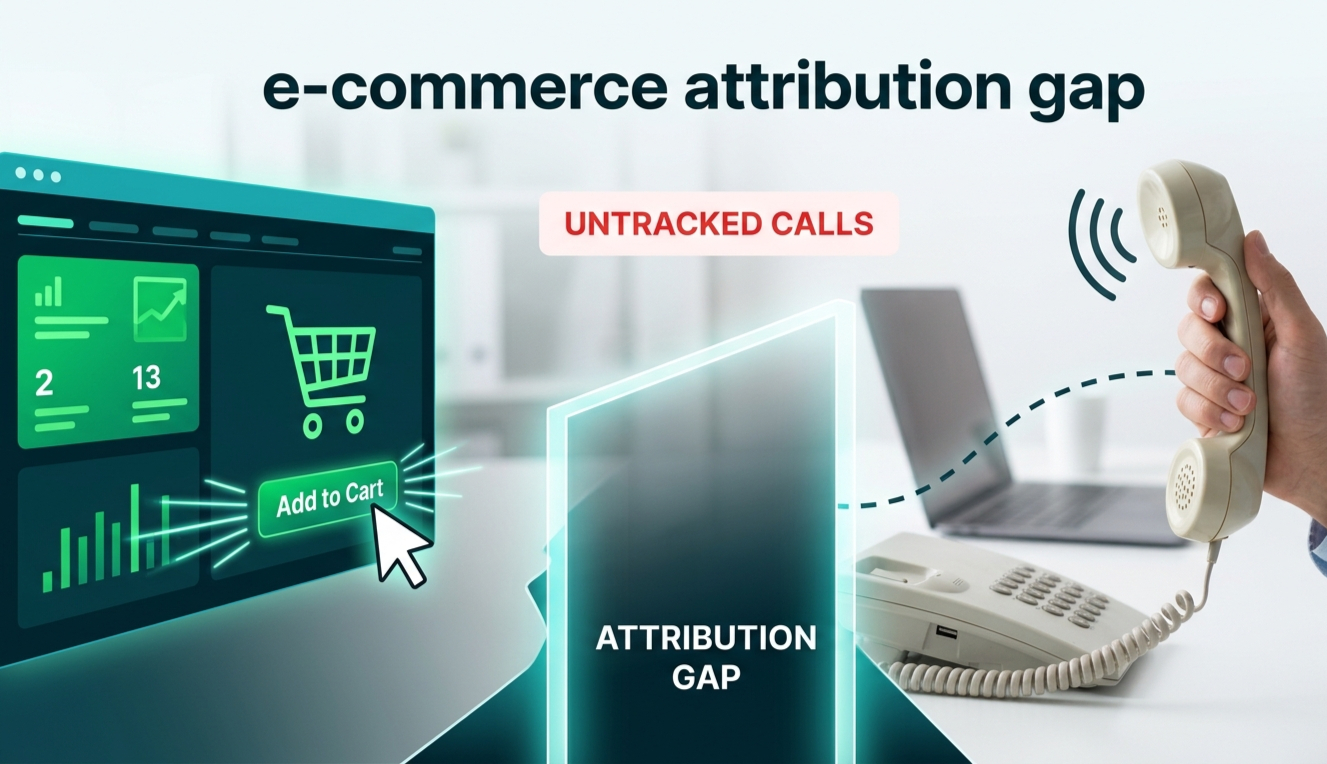
E-commerce businesses are built on digital data. Every click, scroll, and add-to-cart event is tracked, attributed, and optimized. Yet there is a persistent blind spot in most e-commerce analytics stacks: the phone call. A significant share of online shoppers particularly for high-ticket items, subscription products, or complex purchases will pick up the phone before committing to a buy. When those calls are not tracked, the marketing dollars that drove them appear to produce no return at all.
This is the e-commerce attribution gap, and call tracking software is the solution. By connecting every inbound phone call back to the specific ad, keyword, or email campaign that triggered it, you get a complete picture of how your marketing spend actually performs.
Why E-Commerce Businesses Still Receive Calls
The assumption that online shoppers never call is outdated. Research consistently shows that calls are disproportionately likely for purchases above a certain price threshold. Customers calling about a $1,200 mattress, a bespoke piece of furniture, or a multi-seat software subscription are often close to deciding they just need one question answered or one concern addressed before they commit.
Other common call triggers in e-commerce include: shipping time questions during holiday seasons, return and warranty inquiries that turn into upsell opportunities, product compatibility questions for technical items, and subscription upgrade or cancellation calls that a well-trained agent can redirect into a save.
Each of these represents real revenue that originates from a marketing touchpoint. Without call tracking, you cannot see which campaigns are driving these high-intent interactions.
Dynamic Number Insertion: The Technical Foundation
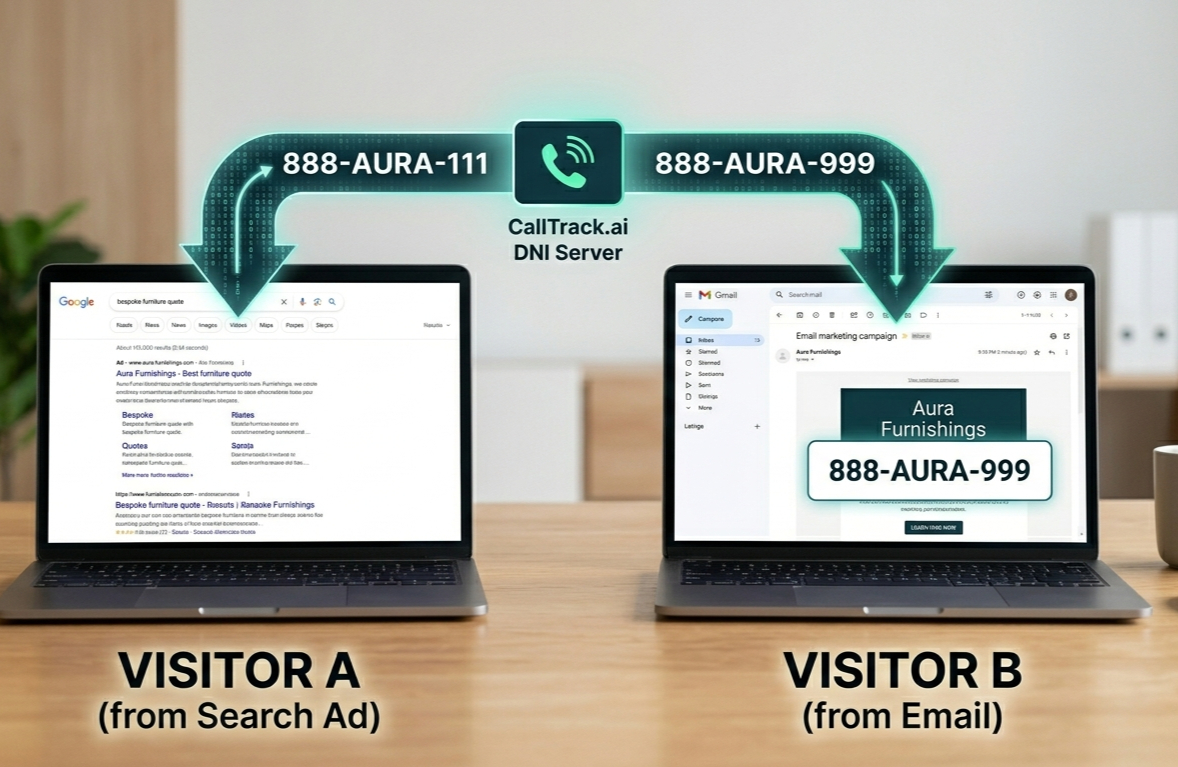
The core mechanism that makes call analytics work for e-commerce is dynamic number insertion (DNI). A small JavaScript snippet on your site swaps the displayed phone number based on the visitor’s source. A shopper who arrived from a Google Shopping ad sees one number; a shopper who clicked an email campaign sees a different one. When they call, the tracking system knows exactly which source to credit.
DNI works at the keyword level for paid search, at the campaign level for display and social, and at the channel level for email, direct, and organic. This granularity means you can see not just that paid search is driving calls, but which specific keywords drive the calls that convert.
Connecting Call Data to Your E-Commerce Analytics Stack
Call tracking data becomes exponentially more useful when it flows into your existing analytics tools. When a caller converts to a sale, that revenue needs to be attributed back to the originating campaign in Google Ads, your CRM, and your reporting dashboards.
CallTrack.ai integrates with major CRM and marketing platforms, allowing call outcomes to be passed back as conversion events. This means your Google Ads optimization algorithms can learn from phone conversions just as they learn from checkout completions. Campaigns that were being under-valued because their customers preferred to call suddenly get the budget they deserve.
High-Value Use Cases for E-Commerce Call Tracking
Abandoned Cart Recovery Calls. Some e-commerce businesses follow up abandoned carts with outbound calls. Call tracking lets you measure which abandoned cart segments are most worth calling and which rep scripts recover the most revenue.
Seasonal Campaign Measurement. Holiday campaigns drive spikes in both online and phone traffic. With call tracking, you can measure the true lift of a seasonal push, including the phone sales that would otherwise be invisible.
Influencer and Affiliate Attribution. Assign unique tracking numbers to each influencer or affiliate partner. Calls generated by their audience are credited directly to the correct partner, making commission tracking clean and dispute-free.
Product Launch Monitoring. A new product launch typically generates an information call spike. Tracking these calls by source tells you which channels are driving the most interest and allows you to staff your phone lines accordingly.
Measuring the True Cost Per Acquisition
Without call data, your cost per acquisition is understated. You are dividing ad spend by only the online conversions, ignoring the phone sales of those same campaigns produced. The result is that some campaigns look expensive when they are actually delivering strong blended returns.
Use call reporting to pull a complete conversion report that combines digital and phone outcomes. For most e-commerce businesses that implement this approach, the true cost per acquisition drops noticeably once phone conversions are counted, sometimes by 20 to 40 percent.
Turn Phone Conversations Into Product and Merchandising Intelligence
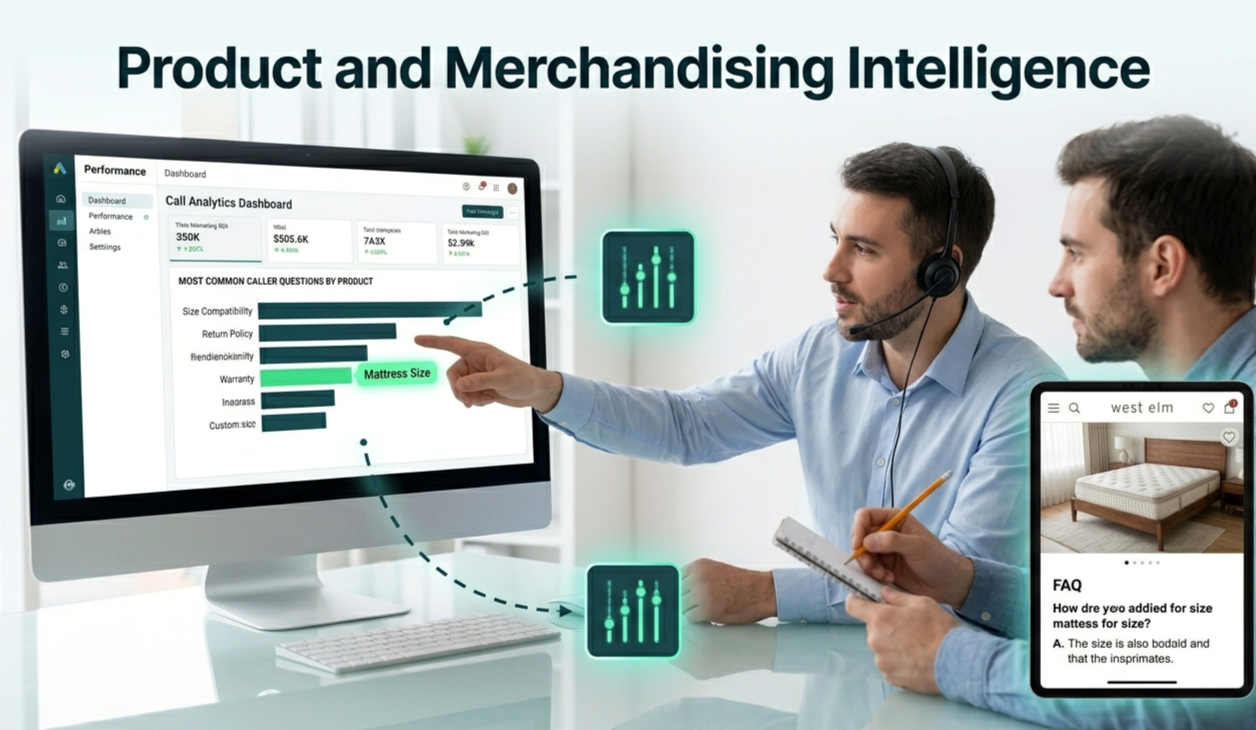
Most e-commerce businesses treat call data purely as a marketing attribution tool. That is only half the value. The actual content of those conversations, what callers ask, what confuses them, what almost stopped them from buying is some of the most honest product feedback you will ever receive.
When you analyze call recordings across a 60-day period, patterns in caller language reveal gaps that your website copy, product descriptions, and FAQ pages are failing to address. If a significant share of callers are asking the same size or compatibility question before purchasing a specific product, that question should be answered prominently on the product page itself. Fixing it reduces call volume for that intent, shortens the path to purchase for online-only shoppers, and improves conversion across both channels simultaneously.
Use CallTrack.ai’s call analytics to tag calls by product category and question type. Over time, you build a ranked list of the most common pre-purchase concerns by product line. Share this list with your merchandising and content teams monthly. The result is a website that progressively answers more of the questions shoppers have before they feel the need to call, which means your phone team handles a higher proportion of genuinely complex, high-value conversations rather than routine information requests.
This feedback loop also surfaces product issues early. A spike in calls about a specific item, complaints about fit, questions about missing components, confusion about instructions is often the earliest signal that something has changed in a product batch or that a supplier issue is developing. Catching it through call data weeks before it shows up in reviews or returns gives your operations team time to act before the problem scales.
Optimize Your Paid Search Bidding With Phone Conversion Data
Google Ads and Meta Ads optimization algorithms are only as good as the conversion signals you feed them. If you are bidding on keywords and optimizing campaigns based solely on online checkout completions, you are working with incomplete data — and your bidding strategy will reflect that incompleteness in ways that cost you money.
Consider a keyword like “custom office furniture quote.” It may drive very few online form submissions because shoppers with that intent overwhelmingly prefer to call. If your tracking setup does not pass phone conversions back to Google Ads, the algorithm sees that keyword as a poor performer and reduces its bid or pauses it entirely. You lose a high-intent, high-ticket traffic source because the data told an incomplete story.
CallTrack.ai’s call tracking platform resolves this by passing qualified call conversions back to your ad platforms as standard conversion events. You define what counts as a conversion, a call over a minimum duration, a call that resulted in a sale, a call from a first-time caller and those events flow into Google Ads just like a completed checkout would. The bidding algorithm now has the full picture and allocates budget accordingly.
The downstream effect on campaign performance is significant. Keywords and ad groups that were being systematically underfunded because their customers preferred calling get the budget their actual conversion volume justifies. In many e-commerce accounts, implementing this integration reveals that one or two previously underperforming campaign segments are actually among the strongest revenue drivers in the account. Combined with call reporting that breaks down revenue by keyword, match type, and ad group, you gain the kind of granular bidding intelligence that separates profitable paid search accounts from those that perpetually chase efficiency without finding it.
Frequently Asked Questions
Do I need to change my website to implement call tracking?
Only a minor addition: a small JavaScript snippet that handles dynamic number insertion. For most e-commerce platforms including Shopify and WooCommerce, this takes under 30 minutes to deploy.
Will showing different phone numbers confuse customers?
No. The experience is invisible to the caller. They see a single number appropriate to their location, call it, and reach your team as normal. The tracking happens in the background.
Can I track calls from mobile shopping ads specifically?
Yes. Mobile click-to-call ads can be assigned dedicated tracking numbers so you can measure call volume and conversion rates from mobile ad campaigns separately from desktop.
How does call tracking work when customers call days after their first visit?
A tracking cookie with a configurable window typically 30 to 90 days remembers the visitor’s original source. When they call later, the attribution is still captured and credited to the correct campaign.
Is call tracking useful for subscription e-commerce businesses?
Especially so. Subscription businesses face upgrade, downgrade, and cancellation calls regularly. Tracking the campaign source of those callers reveals which acquisition channels bring the most loyal subscribers versus the most churners, a critical insight for long-term LTV optimization.
Close the E-Commerce Attribution Gap Today
Stop guessing which ads are driving your high-ticket phone sales and start scaling with 100% visibility into your customer journey. Most e-commerce businesses lose significant revenue data the moment a shopper switches from their screen to the phone. By integrating intelligent tracking, you can finally credit every dollar of offline revenue to the specific digital campaign that earned it. Transform your marketing performance today with CallTrack.ai or contact our experts to see how we can help you capture the full value of your marketing spend.