
Top Call Tracking Metrics Every Business Should Monitor in 2025
- calltrack.ai
- No Comments
Top Call Tracking Metrics Every Business Should Monitor in 2025
In 2025, data-driven marketing has become a cornerstone for businesses that want to stay competitive, and phone calls remain one of the most powerful customer touchpoints. Even in a world dominated by digital interactions, a phone conversation can drive conversions, build trust, and improve customer satisfaction. Businesses using call tracking now have the ability to measure the true impact of their marketing campaigns, optimize performance, and increase ROI. However, to fully leverage this technology, it’s essential to know which call tracking metrics are the most important to monitor and how to interpret them effectively.
Why Call Tracking Metrics Matter
Call tracking metrics provide businesses with clear visibility into how well marketing campaigns are driving phone leads and conversions. By analyzing caller behavior and campaign performance, you can make smarter marketing decisions, eliminate wasted ad spend, and improve customer engagement across all channels. With an increasing number of consumers ignoring unknown or spam-labeled numbers, tracking these metrics allows businesses to ensure they maintain a positive caller reputation and maximize their contact opportunities.
Beyond measuring campaign success, call tracking metrics can help businesses identify operational bottlenecks, improve agent performance, and tailor customer service strategies. They also provide insights into seasonal trends, campaign attribution, and lead quality, making them invaluable for both marketing and sales teams.
Key Call Tracking Metrics to Monitor in 2025
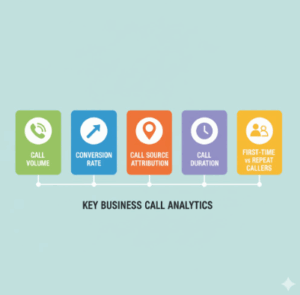
1. Total Call Volume
This metric tracks the total number of incoming calls your business receives over a specific period. Monitoring call volume helps you understand campaign performance, customer interest, and seasonal fluctuations. For instance, retail businesses might see spikes during holiday promotions, while service industries may experience increased inquiries during peak hours. High call volume indicates strong engagement but may also require scaling your support resources to maintain customer satisfaction.
2. First-Time vs. Repeat Callers
Understanding the mix of new leads versus returning customers helps gauge brand loyalty and lead generation effectiveness. First-time callers indicate fresh opportunities for conversion, while repeat callers often signify satisfaction and trust. By tracking this metric, businesses can design targeted campaigns for each segment, personalize follow-ups, and improve overall customer retention.
3. Call Duration
Call duration is a strong indicator of engagement quality. Longer calls usually reflect meaningful conversations, strong intent, or detailed customer support interactions. Short calls, on the other hand, may reveal missed opportunities or dissatisfaction. Monitoring average call duration over time can help identify areas where training, scripting, or process improvements are needed for your agents.
4. Call Source Attribution
Knowing which marketing channel — such as Google Ads, Facebook, email campaigns, or organic search — drives a call is crucial for effective budget allocation. Call source attribution allows businesses to measure the real ROI of each channel, refine campaigns, and invest in strategies that generate the highest quality leads. Without accurate attribution, marketing dollars may be wasted on underperforming channels.
5. Call Conversion Rate
Call conversion rate measures the percentage of calls that result in a desired outcome, such as a sale, appointment booking, or service inquiry. Tracking this metric enables businesses to assess lead quality, agent effectiveness, and campaign performance. High conversion rates indicate well-targeted campaigns and strong agent performance, while low rates may signal a need for script adjustments or improved follow-up strategies.
6. Missed and Abandoned Calls
Every missed or abandoned call represents a potential lost opportunity. By monitoring these metrics, businesses can identify staffing issues, peak call times, or technical barriers that prevent calls from being answered. Reducing missed calls not only improves customer experience but also boosts conversion potential and strengthens brand reputation.
7. Call Scoring and Lead Quality
Modern call tracking solutions often include AI-driven analytics that score calls based on keywords, sentiment, and outcomes. Call scoring helps identify high-value leads, prioritize follow-ups, and optimize sales processes. For example, a lead discussing a specific product or showing urgency can be flagged for immediate attention, increasing the chance of closing the sale.
8. Average Wait Time
Tracking how long callers wait before connecting with an agent is critical for maintaining high service standards. Long wait times can frustrate potential customers, negatively impacting conversions and brand perception. Businesses can use this metric to optimize staffing schedules, implement call-back options, or deploy AI-powered assistants to manage high-volume periods.
How to Use These Metrics to Drive Growth
-
Align ad spend with marketing channels that generate the highest call conversions to maximize ROI.
-
Leverage AI-powered call analytics to quickly identify sales-ready leads and prioritize follow-ups.
-
Train agents using insights from real call data to improve communication, conversion rates, and customer satisfaction.
-
Integrate call tracking data with your CRM to gain a complete view of customer interactions and optimize your marketing funnel.
-
Continuously analyze trends and adjust campaigns based on what the metrics reveal about customer behavior and preferences.

Final Thoughts
In 2025, businesses that effectively monitor and analyze call tracking metrics will outperform competitors relying on guesswork. From understanding total call volume to evaluating conversion rates and call quality, these KPIs provide actionable insights that enhance marketing performance, increase ROI, and improve the customer experience. By leveraging the right call tracking tools and following data-driven strategies, businesses can turn every call into a measurable opportunity for growth.
Pro tip: Implement a smart call tracking solution like CallTrack.ai to gain real-time insights, strengthen marketing attribution, and convert more calls into revenue while maintaining excellent customer satisfaction.