
Call Tracking for Healthcare Providers: Improving Patient Communication and Appointment Conversions
- calltrack.ai
- No Comments
When someone needs a doctor, a dentist, or even a physiotherapist, their first instinct is often simple pick up the phone. It might be a worried parent calling about their child’s fever, a patient checking insurance coverage before a procedure, or someone trying to squeeze in a last-minute appointment on their lunch break. In healthcare, those calls are more than just routine interactions; they’re moments of trust, urgency, and reassurance.
But here’s the catch: while clinics and hospitals invest heavily in digital tools, many still overlook the power of phone calls. Every unanswered call is a missed opportunity, and every poorly handled conversation can mean a lost patient. That’s where call tracking comes in. With platforms like CallTrack.ai, healthcare providers can finally understand, measure, and improve how they communicate with patients, turning more conversations into confirmed appointments.
We’ll look at how call tracking fits into the modern healthcare landscape, why it matters for both patients and providers, and the practical steps you can take to make every call count.
Why Phone Calls Still Matter in Healthcare
Despite the rise of telehealth and online booking, phone calls remain the backbone of patient communication. According to industry studies:
- Over 60% of patients prefer to call a healthcare provider when scheduling appointments.
- More than 70% of first-time patients choose providers based on how quickly they can connect via phone.
- A single missed call can cost a healthcare practice hundreds or even thousands of dollars in lost revenue, especially for high-value specialties like dentistry, cosmetic surgery, or physiotherapy.
Patients call for a wide range of reasons:
- Scheduling new or follow-up appointments
- Confirming insurance coverage
- Asking about symptoms or treatment options
- Requesting prescription refills
- Clarifying billing questions
Every call represents not just a patient inquiry but also an opportunity to provide reassurance, build trust, and strengthen long-term relationships. Without a system to capture and analyse these calls, providers risk losing valuable insights into patient needs and marketing effectiveness.
What Is Call Tracking in Healthcare?
Call tracking is a technology that allows healthcare providers to monitor, record, and analyse phone calls with patients. Instead of relying solely on staff notes or memory, call tracking platforms like CallTrack.ai provide detailed data on each call, including:
- Caller information: phone number, location, and call source
- Call source tracking: which ad, campaign, or keyword triggered the call
- Duration and outcomes: how long the call lasted and whether it resulted in an appointment
- Call recordings and transcripts: enabling quality assurance and compliance checks
- AI-driven insights: sentiment analysis, keyword detection, and conversion tracking
By integrating call tracking into existing workflows, healthcare organisations can align patient communication with their marketing strategies, ensuring that every call is accounted for and optimised.

The Benefits of Call Tracking for Healthcare Providers
1. Improved Patient Communication
Call tracking enables practices to analyse how staff interact with patients. By reviewing call recordings and transcripts, managers can identify areas for improvement such as reducing hold times, improving tone, or addressing common patient concerns more effectively.
AI-driven sentiment analysis also provides insight into how patients feel during calls, highlighting opportunities to enhance empathy and clarity in communication.
2. Higher Appointment Conversion Rates
Not every patient call turns into an appointment. With call tracking, providers can pinpoint why. Is the scheduling process too complicated? Are patients confused about insurance policies? Is staff availability an issue?
Armed with this data, healthcare teams can refine their approach, improving call-handling scripts, streamlining booking processes, and ultimately increasing the percentage of calls that result in confirmed appointments.
3. Optimised Marketing Spend
Healthcare marketing budgets are often spread across multiple channels: Google Ads, Facebook campaigns, local SEO, and more. Call tracking reveals which campaigns drive the most patient calls and conversions.
For example:
- A dental clinic might discover that Google Ads generate high call volume but low appointment conversions.
- Meanwhile, local SEO could deliver fewer calls but a higher conversion rate.
This data empowers providers to allocate their budget toward the channels that deliver the best ROI.
4. Enhanced Patient Experience
Patients expect quick, seamless communication when contacting a healthcare provider. Call tracking can identify bottlenecks such as:
- Long wait times on hold
- Calls going unanswered during peak hours
- Repeated questions due to lack of clear information
By addressing these issues, providers can improve patient satisfaction, which directly impacts retention and referrals.
5. Compliance and Quality Assurance
Healthcare is a highly regulated industry. Call recordings and transcripts provide a valuable audit trail to ensure staff comply with industry regulations such as HIPAA (in the US) or GDPR (in the EU).
Providers can use call monitoring for training purposes, ensuring that staff follow approved scripts, maintain patient confidentiality, and deliver accurate information.
Practical Use Cases of Call Tracking in Healthcare
Let’s break down how different healthcare providers can leverage call tracking effectively:
- General Practitioners (GPs) – Track how many calls turn into booked appointments and identify missed opportunities
- Dental Clinics – Analyse patient inquiries about cosmetic vs. general dentistry to adjust marketing strategies.
- Specialty Clinics (e.g., dermatology, orthopaedics) – Measure ROI of targeted campaigns and optimise patient intake processes.
- Hospitals – Ensure call routing is efficient for urgent care vs. general inquiries, improving response times.
- Mental Health Practices – Use sentiment analysis to understand patient emotions and improve staff empathy during calls.
- Physiotherapy & Rehabilitation Centres – Monitor how many inquiries about treatment plans translate into booked sessions.

How Call Tracking Improves Appointment Conversions
Converting patient calls into booked appointments is where call tracking shines. Here’s how it helps at every step:
- Attribution and Insights – Identify which marketing channels drive the highest-value calls.
- Call Routing – Automatically route calls to the right department or staff member, reducing frustration.
- Staff Training – Use call recordings to coach staff on effective communication techniques.
- Follow-Ups – Track missed or abandoned calls and set up automated follow-ups to recover lost opportunities.
- AI Assistance – Real-time AI prompts can help staff answer patient queries more confidently.
By combining these elements, healthcare providers can consistently turn inquiries into scheduled appointments, reducing no-shows and maximising efficiency.
Overcoming Common Challenges with Call Tracking in Healthcare
While the benefits are clear, some providers hesitate to adopt call tracking due to common concerns:
- Patient Privacy – Advanced platforms like CallTrack.ai use encryption and anonymisation to ensure compliance with privacy regulations.
- Integration with Existing Systems – Call tracking integrates seamlessly with CRMs and EHRs, so providers don’t need to overhaul their existing workflows.
- Staff Resistance – Some staff may feel monitored. Positioning call tracking as a training and improvement tool helps build trust.
- Cost Considerations – While there’s an upfront investment, the increase in appointment conversions and marketing ROI quickly justifies the cost.
Best Practices for Implementing Call Tracking in Healthcare
- Set Clear Goals – Define whether your priority is improving appointment conversions, optimising marketing spend, or enhancing patient satisfaction.
- Ensure Compliance – Work with a provider that understands healthcare regulations (HIPAA, GDPR, etc.).
- Integrate with Existing Systems – Connect call tracking with your CRM or EHR to create a unified patient profile.
- Train Staff Regularly – Use insights from call recordings to coach staff and improve communication.
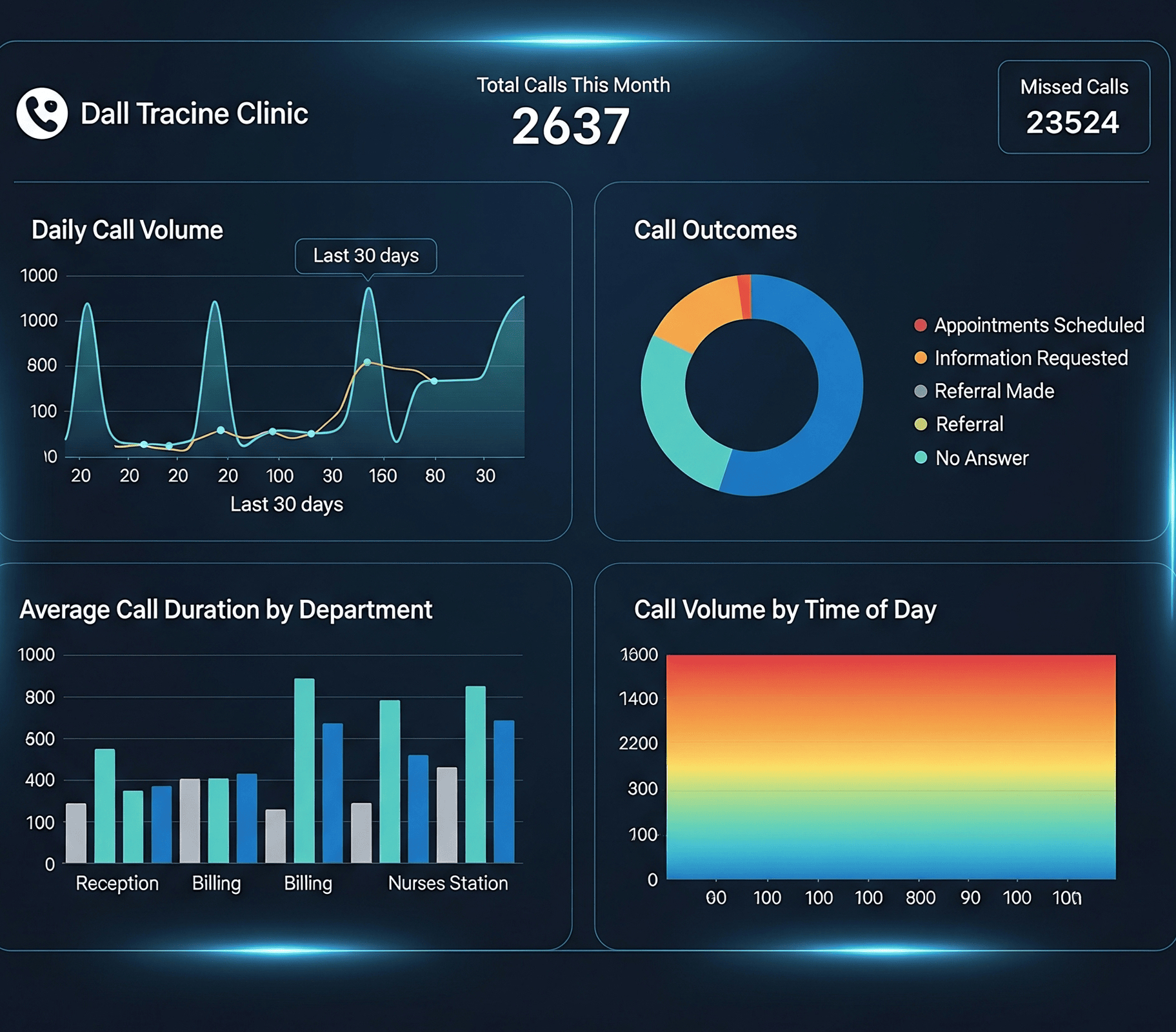
- Measure What Matters – Track key metrics like call volume, missed calls, appointment conversion rates, and average handling time.
Key Metrics to Track for Healthcare Call Performance
To maximise the value of call tracking, healthcare providers should focus on the right metrics. While raw call volume is important, deeper insights come from analysing how those calls influence patient outcomes and practice growth. Some of the most impactful metrics include:
- Appointment Conversion Rate – The percentage of calls that result in scheduled appointments. This is the single most important measure of how well your staff turn inquiries into bookings.
- Missed Call Rate – The number of patient calls that go unanswered. High missed call rates often indicate staffing or scheduling issues.
- Average Call Handling Time – How long staff spend on calls. Short calls may indicate rushed interactions, while overly long calls may reveal inefficiencies.
- Patient Sentiment Scores – AI-powered sentiment analysis can reveal whether patients felt reassured, confused, or dissatisfied after a call.
- Marketing Attribution – Understanding which campaigns, ads, or keywords are driving the most valuable patient calls helps optimise your budget.
- Repeat Callers – Tracking patients who call multiple times without booking may highlight gaps in communication or scheduling processes.
By consistently monitoring these metrics, providers can fine-tune their communication strategies, reduce inefficiencies, and ensure patients receive the best possible experience every time they pick up the phone.
Future of Call Tracking in Healthcare
The next wave of call tracking in healthcare is powered by AI. With advanced tools like CallTrack.ai, providers will benefit from:
- Real-time transcription and analysis for instant insights.
- AI-driven call routing that directs patients to the most appropriate staff member.
- Predictive analytics to forecast appointment demand and optimise staffing levels.
- Integration with telehealth platforms, ensuring a seamless patient journey across digital and voice channels.
As healthcare becomes increasingly competitive, providers that leverage these tools will stand out for their efficiency, responsiveness, and patient-first approach.
Turning Every Patient Call into an Opportunity for Care and Growth
In healthcare, every phone call matters. It’s more than just a scheduling request, it’s a critical moment where patients seek reassurance, guidance, and trust. By implementing call tracking technology, healthcare providers can transform these moments into meaningful opportunities, improving patient communication, boosting appointment conversions, and optimising their marketing strategies.
With solutions like CallTrack.ai, practices not only capture valuable call data but also unlock actionable insights that enhance patient experience and streamline operations. The result is a win-win scenario: patients receive the attention and care they deserve, while providers grow their practice with measurable, data-driven results.