AI-Powered Call Analytics in 2025
- calltrack.ai
- No Comments
In 2025, businesses are becoming more data-driven than ever — and AI-powered call analytics is leading the transformation. While online interactions dominate, phone calls still play a crucial role in customer acquisition, sales, and support. Every call holds a wealth of information that can reveal customer intent, satisfaction, and conversion potential. With the help of AI-powered call analytics, companies can now uncover these insights in real time and use them to make smarter business decisions.
Why AI-Powered Call Analytics Matters
Traditional call tracking focuses on basic metrics like call duration, time, or source. While helpful, that data only scratches the surface. AI-powered call analytics goes beyond — it listens, learns, and interprets conversations using natural language processing (NLP) and machine learning.
It can detect emotions, highlight keywords, identify call outcomes, and automatically categorize interactions by quality and intent. This means your team no longer needs to manually review recordings to understand what’s working.
By analyzing this data, businesses can:
-
Uncover which ads and campaigns generate high-value leads.
-
Improve conversion rates by recognizing buying signals earlier.
-
Identify customer pain points based on recurring words and sentiment.
-
Coach agents more effectively using real-world feedback.
Simply put, AI-powered call analytics helps transform raw call data into measurable growth opportunities.
Top Benefits of AI-Powered Call Analytics
1. Smarter Marketing Attribution
AI automatically links each call to its true marketing source — whether it came from a Google Ad, social media, or an organic search. With this visibility, marketers can stop guessing and start investing in what actually works. Knowing which campaigns drive the highest ROI allows for better budget allocation and more targeted outreach.
2. Lead Scoring and Qualification
Instead of spending hours listening to recordings, AI systems score calls based on sentiment, urgency, and keyword patterns. For example, a caller saying, “I’m ready to sign up today,” would be ranked higher than someone asking general questions. These scores help sales teams focus on the most promising leads first, speeding up response times and improving close rates.
3. Improved Customer Experience
AI-powered call analytics identifies emotional tone and frustration cues within conversations. If multiple callers express similar concerns, the system can alert managers to potential service issues. This proactive approach improves satisfaction and builds stronger customer relationships.
4. Real-Time Insights for Teams
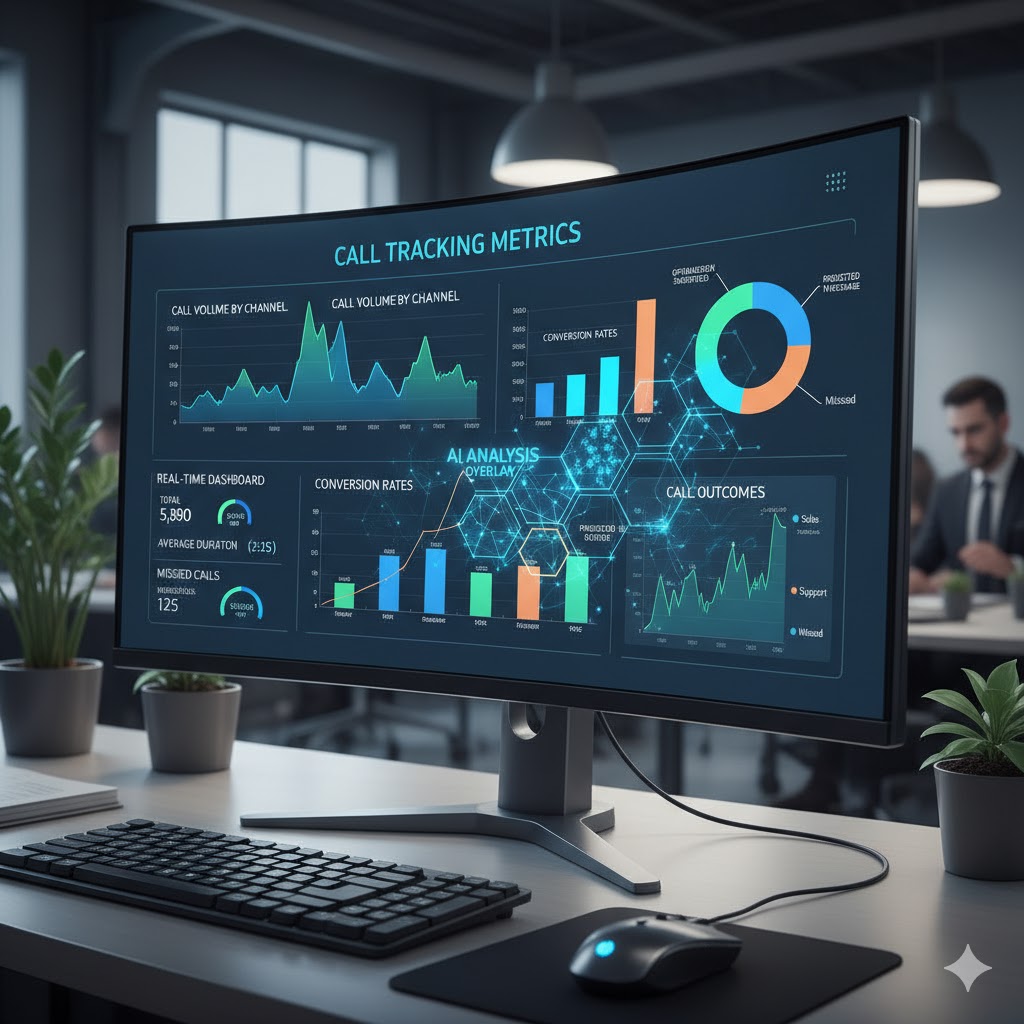
In 2025, waiting for manual reports is outdated. Modern call analytics tools offer real-time dashboards that display agent performance, conversion trends, and customer sentiment. Businesses can make adjustments on the spot — refining ad copy, updating scripts, or deploying additional support when demand spikes.
5. Conversion Optimization
AI doesn’t just collect data — it learns from it. By analyzing thousands of calls, it can identify which phrases, tones, or offers lead to more conversions. This information helps teams fine-tune their approach, making every interaction more effective. Over time, even small improvements can lead to major revenue gains.

How AI-Powered Call Analytics Is Changing Industries
Across multiple industries, AI-powered call analytics is driving efficiency and results:
-
Healthcare: Clinics use AI insights to track appointment inquiries and reduce missed calls, improving patient communication.
-
Real Estate: Agencies identify serious buyers early based on call sentiment and conversation depth.
-
Finance: Lenders monitor call scripts for compliance while spotting high-value loan leads.
-
Marketing Agencies: Firms use AI to prove ROI to clients with clear attribution data and conversion tracking.
The technology doesn’t just analyze calls — it refines entire marketing strategies, ensuring that every dollar spent leads to measurable impact.
Implementing AI-Powered Call Analytics in Your Business
Getting started with AI analytics is simpler than it sounds. Here’s how to begin:
-
Integrate with your CRM: Connect your call tracking platform with systems like HubSpot, Salesforce, or Pipedrive for unified data.
-
Set goals: Define what success means — whether it’s increased conversions, shorter response times, or better agent performance.
-
Activate AI scoring: Use keyword spotting and sentiment detection to automate lead ranking.
-
Review insights regularly: Monitor dashboards weekly to identify new patterns, missed opportunities, or performance improvements.
-
Train your team: Share insights from AI reports with your marketing and sales teams to enhance communication and performance.
Over time, this approach will help you uncover trends, reduce guesswork, and scale results more efficiently.
The Future of AI in Call Tracking
As AI technology advances, AI-powered call analytics will become even more predictive. Instead of only analyzing what happened, it will forecast what’s likely to happen next — from customer churn to future purchase intent. Businesses that adopt this technology now will have a significant competitive edge, turning every call into a source of strategic intelligence.
Final Thoughts
In 2025, companies that rely on AI-powered call analytics will outpace competitors that still depend on manual tracking. It’s no longer just about counting calls — it’s about understanding what drives them. From smarter attribution and real-time insights to improved lead scoring and customer satisfaction, AI is redefining how businesses connect with customers.
Pro Tip: Implement an intelligent platform like CallTrack.ai, which uses real-time AI-powered analytics, lead scoring, and marketing attribution to transform every call into a measurable growth opportunity.